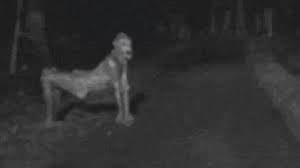
Monsters that walk on their skin
Myth of the Navajo Witch, the Skin walker
A skin walker is...
According to Navajo folklore, skinwalkers are sorcerers or shamans with the supernatural power to assume the shape of an animal. Among the Navajo people, a skinwalker is referred to as "yee naaldlooshii," which means "he who walks on all fours."
A skinwalker is a supernatural being with the ability to do good or evil, according to Navajo beliefs. They can supposedly change into whatever animal they choose, but most often coyotes, wolves, owls, and crows. When in animal shape, they can convincingly imitate the look and sound of that species.
Skinwalkers have a reputation for being exceedingly harmful and hazardous. People think they may do harm to others by spreading disease or causing untimely deaths. It is stated that they may utilize their abilities to injure their victims not only physically but also psychologically.
According to Navajo folklore, skinwalkers are once good people who have resorted to witchcraft and black magic after committing a particularly heinous crime, such as murdering a member of their own family. It is assumed that they are motivated by avarice, vengeance, or the desire for power.
It's worth noting that skinwalkers are an integral component of Navajo mythology and the religion and philosophy of the Navajo people. Many Navajo avoid talking about or disclosing information regarding skinwalkers because of the taboo nature of the issue among Navajo communities.
The Navajo reservation is located in three different states in the United States (Arizona, New Mexico, and Utah), and skinwalkers are said to call this area home in Navajo mythology. Because of the danger associated with skinwalkers, their homes and hangouts are seldom mentioned in myths and folktales.
According to Navajo folklore, skinwalkers are sorcerers or shamans with the supernatural power to assume the shape of an animal. Among the Navajo people, a skinwalker is referred to as "yee naaldlooshii," which means "he who walks on all fours."
A skinwalker is a supernatural being with the ability to do good or evil, according to Navajo beliefs. They can supposedly change into whatever animal they choose, but most often coyotes, wolves, owls, and crows. When in animal shape, they can convincingly imitate the look and sound of that species.
Skinwalkers have a reputation for being exceedingly harmful and hazardous. People think they may do harm to others by spreading disease or causing untimely deaths. It is stated that they may utilize their abilities to injure their victims not only physically but also psychologically.
According to Navajo folklore, skinwalkers are once good people who have resorted to witchcraft and black magic after committing a particularly heinous crime, such as murdering a member of their own family. It is assumed that they are motivated by avarice, vengeance, or the desire for power.
It's worth noting that skinwalkers are an integral component of Navajo mythology and the religion and philosophy of the Navajo people. Many Navajo avoid talking about or disclosing information regarding skinwalkers because of the taboo nature of the issue among Navajo communities.
Where do they make their home
The Navajo reservation is located in three different states in the United States (Arizona, New Mexico, and Utah), and skinwalkers are said to call this area home in Navajo mythology. Because of the danger associated with skinwalkers, their homes and hangouts are seldom mentioned in myths and folktales.
It's worth noting that skinwalkers aren't generally seen as genuine by modern culture and are instead mostly found in Navajo legend. They are part of Navajo folklore and other cultures' mythologies and worldviews.
How can you recognize the presence of a skin walker?
There are clues that can point to the existence of a skinwalker, according to Navajo beliefs and tradition. Remember, however, that these are only Navajo superstitions, and they may not even have any truth in reality. The existence of a skinwalker is commonly indicated by the following:
Animals acting strangely: Skinwalkers are said to have supernatural powers over animals. The existence of a skinwalker may be inferred from the observation of animal behavior that seems out of the ordinary or odd. A suspicious animal can be one that suddenly turns violent or one that approaches human settlements without fear.
Strange noises: Skinwalkers are supposed to be able to accurately imitate the sounds of animals. Strange or distorted animal sounds, such as howls or screams, might indicate the presence of a skinwalker.
Skinwalkers, who supposedly can shapeshift into animals, have been seen in strange places. A skinwalker may be present if you encounter an animal acting in an out-of-the-ordinary, intelligent, or deliberate way.
Believers in skinwalkers often report feeling uneasy or as if they are being watched whenever one is in the area. They may get a shiver down their spine, feel the hair on the back of their neck rise, or have a foreboding feeling that something bad is about to happen.
Encounters with skinwalkers are most often reported after dark. They are more likely to be seen or encountered at night, especially around the full moon.
It was in Tony Hillerman's book "Skinwalkers" from the 1980s when the first contemporary popular culture reference to skinwalkers appeared. Mystery fans will recognize the names of characters and settings from Tony Hillerman's works, which are often set in the Southwest and among the Navajo people. In his novel "Skinwalkers," he popularized the idea of a Navajo skinwalker as an integral part of the story. The novel's success paved the way for skinwalkers to be referenced and portrayed in other media, including movies, TV series, and video games. Hillerman's depiction of skinwalkers is fictitious but inspired by Navajo mythology and folklore.
Skinwalkers have a large place in Navajo mythology and are fundamental to Navajo traditional beliefs. Navajo ideas regarding skinwalkers are varied and subtle, depending on the individual and the community. The Navajo generally believe the following about skinwalkers:
1. According to Navajo mythology, skinwalkers may change their appearance and shape to blend in with the animal kingdom. It is said that they can shapeshift into animals like wolves, owls, crows, and coyotes. They take on the enhanced senses, quickness, and other characteristics of the animal they change into.
2. Dark magic and supernatural powers: Skinwalkers are said to have resorted to such practices. It is thought that they acquired their abilities by criminal behavior, including acts of violence and sacrilege. Skinwalkers in Navajo legend are said to have the power to influence the minds of humans, change their appearance, manipulate the elements, and bring disease and disaster upon others.
3. The public has an unfavorable impression of skinwalkers because of the way they are assumed to exploit their abilities for evil. People who encounter them fear that they will get ill or die. It's believed they may do damage physically, influence people's thoughts, and cause discord in groups.
4. Cultural taboos and the need for discretion: The Navajo tend to avoid talking freely about skinwalkers because of the perceived risk they pose. It is often thought that bringing up skinwalkers or discussing them might attract their attention or have a bad affect, thus talking about them in public is strongly forbidden.
5. To defend oneself against skinwalkers, the Navajo engage in a number of ceremonies and activities. There are several practices that have been used for centuries to ward off the evil eye, such as traditional rituals, blessings, amulets, and the usage of certain herbs and plants.
Respect and cultural sensitivity are required while engaging with Navajo views regarding skinwalkers. Some members of the Navajo community may be reluctant to talk about or divulge information regarding skinwalkers because of the subject's profound importance within their culture.
In different regions of the globe, "devil monkeys" are linked to a wide variety of myths and cryptids. Large, hostile monkeys or apes are the most common descriptions of these monsters. Keep in mind that until these stories can be proven scientifically, they will stay in the realm of folklore and cryptozoology.
The "New Jersey Devil Monkey," sometimes called the "Grapevine Gorilla" or the "Winged Monkey," is a notorious specimen of a devil monkey that supposedly lives in the Pine Barrens of New Jersey, in the United States. The New Jersey Devil Monkey has been described in a variety of ways, but it often combines elements of a monkey or ape with those of a bat and has blazing red eyes.
The "Kasai Rex" or "Kasai Devil Monkey" of Central Africa is another such instance. This beast is said to have the body of a gorilla and the face of a baboon, complete with canine teeth and a powerful jaw. Its purported habitat is the Kasai region's tropical rain woods.
It's important to remember that local folklore, urban legends, and cryptozoological tales are the primary sources for stories and sightings involving devil monkeys. These accounts originate from eyewitness accounts or sensationalized media, but there is no hard proof to back them up.
Belief in devil monkeys, like belief in any cryptid or mythical creature, differs greatly amongst people. Many people dismiss such beings as pure inventions of the human imagination.
In general, the phrase "Pangea Appalachian connection" is not understood in any one particular way. It's as if the idea of Pangea and the Appalachians were merged into one.
Millions of years ago, all the continents we know today were linked into a single landmass known as Pangea. It's only a notion based on geological facts, not tied to any particular area or chain of mountains.
On the other side, the Appalachian Mountains may be found in eastern North America. They cover a large geographic area, encompassing many U.S. states such as Alabama, Georgia, and Tennessee.
No clearer explanation or comprehension of the "Pangea Appalachian connection" can be offered in the absence of any more context or knowledge. It's conceivable that the phrase is being used in a geological, paleontological, or similar context. I may be able to help you more if you give me additional information or offer some background.
Over 2,000 miles long, the Appalachian Trail traverses the eastern United States and is rife with mythology and folklore. Not all of the traditions and folklore connected with the path can be traced back to its actual route. Some instances are as follows:
1. The White Blaze: The white blaze is the most recognizable route sign along the Appalachian route. There is a famous myth about the Appalachian Trail that says if you follow a white blaze after dark, you could meet the ghosts of hikers who died there.
2. The Brown Mountain Lights are strange lights that have been reportedly seen along the Appalachian Trail in North Carolina's Linville Gorge and Brown Mountain. There are many traditions and beliefs surrounding these mysterious lights, with some believing they are the souls of Native Americans who have passed on.
3. The Moon-Eyed People are a legendary people that appear throughout Appalachian folklore, most notably in Cherokee mythology. It was stated that these aliens were pale, had huge eyes, and were photosensitive. People think they used to live in the highlands but moved underground to avoid the heat.
4. According to Appalachian legend, there exists a big, cat-like monster with luminous eyes known as the Wampus Cat. The Wampus Cat, according to folklore, prowls the woods and hills, where it makes strange noises and curses anybody unlucky enough to cross its path.
5. There are rumors of a lost Cherokee tribe that mysteriously disappeared into the Appalachian Mountains. In some accounts, they have become spiritual protectors of the land or still live in secret groups.
These tales have been handed down through the years, becoming entwined with the region's rich history and breathtaking landscapes. They add to the allure and mystery of the Appalachian Trail and the landscapes it passes through.
Rules exist, it would seem, in Appalachia. No, you didn't see anything out there that wasn't already there. If you think you hear your name being called, the answer is no. Don't run away just because you sense danger following you. Do not whistle in the woods, and avoid going there at night.
Many of the Europeans who settled in the Appalachians were from the British Isles, and scholars of both cultures have noticed significant similarities between the stories of the two places. Do you wish to make anything out of the fact that believers claim both places have an unusually thin barrier between the worlds?
Skinwalkers are vile monsters in Navajo folklore. Witches. Dark sorcerers are human beings who become powerful after executing a series of horrific acts, such as killing a loved one. Their ability to change form into other animals like foxes and coyotes is what sets them apart. Usually, however, they just morph into wolves. And they can access Upper Antelope Canyon, as well as other planets through magical gateways, unlike any other humanoid dogs.
The use of skinwalkers as an alibi in a murder trial in Flagstaff, Arizona, in 1987 catapulted the concept into the mainstream awareness. A Navajo lady, Sarah Saganitso, 40, was discovered dead in the parking lot of the hospital where she worked. Former Northern Arizona University English professor George Abney was charged, arrested, and tried on several charges. Saganitso was discovered with a broken stick across her neck and a clump of burial grass by her vehicle, leading the defense to contend that a skinwalker had murdered her. The defense argued that the two items were proof of a skinwalker ritual. Abney was found guilty at first, but was eventually exonerated.
There is no connection between Wendigos and Skinwalkers. They each represent a unique character in Native American mythology.
1. The Wendigo is a legendary monster from Algonquian mythology that is said to dwell in the woods of northern North America. Many accounts characterize it as a monstrous ghost with a penchant for cannibalism. It is widely held that cannibalism among humans is what ultimately gave rise to the terrible Wendigo. It's often connected with colder months, lean times, and ravenous appetites for human flesh.
2. However, the Skinwalker comes from Navajo mythology and is only relevant to Navajo people and culture. It is often thought that Skinwalkers had the capacity to assume the form of different animals, therefore acquiring those creatures' skills and traits. Skinwalkers have a reputation for evil deeds and the practice of witchcraft or black magic. It is thought that they bring bad luck to anyone around them.
Although both the Wendigo and the Skinwalker may be considered supernatural creatures in Native American mythology, these two entities come from different cultural contexts and are shown and described in different ways.
There are a number of reasons why some people would assume that the Appalachian Trail is both ancient and mythical:
1. The Appalachian Trail has a rich history and is firmly rooted in the cultural traditions of the areas it traverses. It goes through a wide variety of scenery, visiting landmarks and communities rich in history and customs. The eternal and mythic qualities of natural beauty and historical importance go hand in hand.
2. The Appalachian area has a long history of mythology and stories, which may add to the impression that the path is a magical and mysterious place. People's imaginations and faith in the area's mythological features are piqued by tales of mythical animals, ghostly encounters, and inexplicable happenings.
3. The Appalachian Mountains are one of the world's oldest mountain ranges, and the surrounding landscape is just as ancient. Their geological structures and raw beauty evoke a feeling of the ancient and eternal. The presence of old trees, unusual rock formations, and breathtaking views all contribute to the trail's overall impression of antiquity.
4. Protecting the natural and cultural history of the Appalachian Trail has been a top priority for the Appalachian Trail Conservancy and other groups. The trail's antiquity and mythological significance may be bolstered by the continued dedication to conservation and preserving its historical integrity.
The Appalachian Trail is a real and physical place, despite its long history and plenty of legends and myths. The presence of this path is not limited to the world of mythology; it is a genuine path that may be walked and experienced by humans.
Certainly! There is a wealth of mythology and stories connected to the Appalachian Trail and the surrounding area. Some common instances of such tales and mysterious occurrences are as follows:
1. Earlier I described the strange Brown Mountain Lights, which have been recorded along the North Carolina sections of the Appalachian Trail in Linville Gorge and Brown Mountain. These lights have been variously characterized as luminous orbs that emerge and fade in the night sky, or as flickering luminous forms. Their mysterious origins and characteristics have given rise to mythology and conjecture.
2. Several hikers have reported seeing ghosts while on the Appalachian Trail. In these accounts, hikers often report seeing ghosts or hearing voices from the afterlife. Ghosts of Native Americans, hikers who got lost, and victims of path accidents have all been reported.
3. Hikers and villagers have both reported seeing dark figures or other unexplained beings in the forest. During these meetings, people often report seeing shadowy entities that suddenly disappear or move inexplicably. Some people believe that supernatural creatures or entities must be responsible for these occurrences.
4. Legends of hauntings surround many of the ancient cabins, homesteads, and abandoned buildings that dot the Appalachian area. Hikers have reported feeling uneasy, hearing strange noises, and even seeing ghostly figures in these abandoned areas.
5. The Appalachian Trail and the surrounding area are both rich in cryptid sightings. The existence of cryptids, or monsters of folklore and urban mythology, is up for discussion. Some examples include sightings of Bigfoot and other huge, strange animals in the wild.
These tales and mysterious occurrences are largely transmitted by word of mouth and individual testimonies. They add to the allure of the Appalachian Trail to people who seek adventure and are fascinated by the region's history and natural scenery. Each reader must draw their own conclusions on the veracity of the supernatural or inexplicable elements included in these tales.
It is widely believed that many cryptids and other fantastical animals call the Appalachian Mountains home. Some instances are as follows:
1. Bigfoot/Sasquatch: Bigfoot is one of the best-known cryptids in the world. A big, hairy, upright-walking ape-like creature is a common description of this creature. Bigfoot sightings and interactions have been recorded often in the Appalachian region, especially in forested and wilderness settings.
2. Mothman: The Mothman is a legend in Point Pleasant, West Virginia, a little city not too far from the Appalachian Mountains. A big, avian humanoid with fiery red eyes is reported. In the 1960s, reports of sightings of a mysterious creature called the Mothman were linked to catastrophic occurrences. The Mothman tale has endured despite the lack of any credible evidence for its veracity.
3. The Snallygaster is a mythological monster that is often associated with the Appalachian area, but has roots in Maryland. The Snallygaster has been shown in a wide variety of ways, from being part bird and part reptile to having tentacles or octopus-like appendages. It is reported that the Snallygaster is a dangerous predator that preys on both people and animals.
4. Sheepsquatch: Sheepsquatch, or the "White Thing," is a cryptid mostly recorded in West Virginia and the surrounding Appalachian area. It has sharp fangs and can let off bloodcurdling screams, and its hair is either white and woolly or white and shaggy. Observations are often linked to interactions near farmlands or woodlands in rural settings.
5. Although the Lizard Man is most usually linked to the Lowcountry of South Carolina, he has also been linked to the Appalachians. It has been likened as a lizard or a bipedal reptile, albeit it has humanoid features. The Lizard Man has been described as having scaly skin, flashing red eyes, and acting strangely when seen.
These are but a handful of the cryptids that have been linked to the Appalachians. Note that tales are often based on hearsay and local mythology, neither of which can be used to confirm the reality of these animals. Folklore, mythology, and unexplained events come together in the mystery that is the cryptid.
A Guide for Aspiring Skinwalkers
Some witches began their lives as revered healers or spiritual gurus before turning to wickedness. They may be either male or female, however men make up the vast majority. They blend in with the tribe during the day, and then metamorphose at night.
Initiation into the secret organization of Skinwalkers involves the most heinous of acts: the murder of a close relative, usually a sibling. After doing this, the person will get supernatural abilities, including the ability to assume the form of any animal they want. They may take the form of any animal, but most often manifest as coyotes, wolves, foxes, cougars, dogs, and bears. Skinwalkers are so called because after their transformations they don the skins of the animals they have become. On their heads, they would sometimes place animal skulls or antlers for added intimidation. Animals are chosen according on the skills required for a certain mission (e.g., speed, strength, endurance, stealth, claws, fangs, etc.). If they are attempting to elude pursuers, they may revert to their previous shape.
As a result, it is considered very offensive to wear the fur of a predatory animal among the Navajo. Sheepskin, leather, and buckskin, however, are all fair game.
By making eye contact with their victims, skinwalkers may takeover their bodies. Once the witch has control, the victim will say and do things they normally wouldn't.
After assuming animal form, observers saw striking differences between their eyes and those of the creatures they had assumed the form of. Instead, their eyes seem like human, except that when exposed to light, they become a vivid shade of red. On the other hand, when they assume human shape, their eyes take on a more animal appearance.
Initiating new members, planning their actions, harming individuals from a distance with black magic, and performing wicked ceremonial rituals are only some of the things that the evil society of witches engages in when they convene in dark caverns or other hidden locations. The dancing, feasting, rituals, and sand-painting during these "corrupted" rites are identical to those at other tribal events. The villains are also said to perpetrate cannibalism, incest, and grave robbing, as well as necrophilia with female corpses. During these get-togethers, the Skinwalkers either take on animal shapes or strip down to their underwear, dressing only in ceremonial paint and beaded jewelry. Typically, an extremely strong and elderly Skinwalker acts as head of the Skinwalkers.
In addition to the aforementioned abilities, skinwalkers may also cause sickness and death, ruin property, spread disease, and read minds.
Those who have had direct experience with skinwalkers mention a number of telltale signs that one is in the presence of one of these wicked creatures. They annoy homeowners by hammering on walls, scratching at roofs, and knocking on windows. They have sometimes been seen looking in via open windows. They often jump out in front of moving automobiles in an attempt to cause mayhem.
In addition to their shapeshifting abilities, Skinwalkers are said to have the ability to command and manipulate nocturnal animals like wolves and owls to perform their bidding. The dead may be resurrected and used as weapons by those who can summon their spirits. As a result, Native Americans seldom went anywhere without a group.
It is supposed to have magical abilities, such as the capacity to run faster than a vehicle and leap large cliffs. They leave traces bigger than animals and move at speeds that are difficult to keep up with. They have been spotted and reported as having characteristics of both humans and animals. However, there have been reports of the monster dressed in worn clothing.
The Skinwalker murders for material gain, personal gain, jealousy, spite, or retribution. Additionally, it robs graves for material gain and gathers essential materials for use in black magic. These witches get their sustenance from their victims' remaining years, thus they must keep killing or eventually die off.
It has long been believed that witches and skinwalkers are to responsible for unforeseen difficulties and tragedies like as illness, drought, bad harvests, and untimely deaths. Smaller, more personal issues were sometimes attributed to witchcraft as well, including gusty winds during dances, unrequited love between partners, the loss of cattle, and a change in fortune.
This was most pronounced during the 1878 Navajo Witch Purge, which originated as a cultural reaction to the influx of newcomers into Navajo territory. U.S. after a string of conflicts. The Long Walk of the Navajo began in 1864 when the U.S. Army forcibly removed the Navajo from their homeland and forced them to march to Bosque Redondo (Fort Sumner) in New Mexico.
There, poor water quality, failing harvests, disease, and death greatly reduced the population. The Navajo were permitted to return to the Four Corners region after the government recognized they had made a mistake and kept them out for four years.
Many members of the tribe reportedly resorted to shapeshifting during this time period in order to survive. Meanwhile, the bulk of the tribe had begun to believe that their deities had abandoned them.
Conditions improved as the people returned to their country, but the skinwalkers they blamed for so many years of hardship on the reserve were still among them. Witchcraft accusations were made, and skinwalkers were hunted. A copy of the Treaty of 1868 was discovered wrapped in a collection of witch relics, setting off a chain reaction of violent events among the tribe's members. Forty Navajos were executed during the "Navajo Witch Purge" of 1878 in an effort to bring peace and stability back to the tribe after members had been accused of practicing witchcraft.
Most reports of witches in modern times are "trickster-like" rather than involving actual harm.
Numerous witnesses have reported fast animals keeping pace with their cars. However, after a little while, they begin to flee towards the woods. These creatures morph into men and sometimes knock on the car's bonnet as they go.
The guy was fixing up an old ranch house when he heard raucous laughing coming from the sheep pens outside. When he went to check whether there was anybody else in the enclosure, he saw that all the other sheep had gathered in one corner. A ram that had been separated from the herd stood up and laughed in a way that was unmistakably human. When the guy looks into the ram's eyes, he realizes that they are more human than animal. The animal then strolled away nonchalantly on all fours.
Some claim to have seen them tearing through the night, occasionally transforming into a ball of fire that leaves colorful trails in its wake. Others have reported seeing humanoid creatures on cliffs, mountains, and mesas glaring down angrily at them.
One of the most significant things to happen in the 1980s included a family on a road trip across the Navajo Reservation. As they slowed to make a tight turn, something leaped out of the ditch. It was said to be dressed in a shirt and jeans, and to have a black, hairy body. A couple of days after the incident, the family in Flagstaff, Arizona, was roused from sleep by the sound of loud drumming and chanting. Three shadowy "men" stood outside their fence outside their house. These mysterious beings, however, apparently were unable to scale the barrier and quickly disappeared.
Southwest Colorado, southeast Utah, northeast Arizona, and northwest New Mexico make up the Four-Corners region where these incidents have taken place.
The Navajo people strongly reject witchcraft since it goes against their beliefs and morals. In their everyday lives, they actively seek to avoid, prevent, and treat the condition. When it does occur, however, their rules have always said that anybody who turns into a witch loses all claim to humanity and should be put to death.
The problem is that skinwalkers are very difficult to kill. If you try to murder a witch, she will likely seek vengeance. To kill a Skinwalker, you need the help of a strong shaman who is versed in rituals and spells that can turn the creature's wickedness back on itself. White ash-coated bullets are another option for killing the monster. But the witch's neck or head must be struck by this bullet.
The Navajo have a long-standing cultural norm of not disclosing the existence of skinwalkers to non-Navajo people for fear of reprisal. Even among the locals, this is a very sensitive topic.
Listen to our podcast on Spotify or anywhere you listen to your podcast for free today;
THE SUPERNATURAL COLLECTIVE PODCAST WITH ADRIANA HARTS
 enly, she heard a loud noise coming from the roof of the house. it sounded like something heavy thumping against the roof and then rolling down the side of the house. about half an hour later, she could smell smoke. SHe woke Gorge up and picked up her young daughter who was sleeping with them in a cot. both Gorge and Jenny yelled for their kids to get up and ran out of the house. Gorge went to wake Mariam up from the couch and helped her outside. Gorge Jr, and John both ran outside after them. However after a few minutes it was evident that the children sleeping upstairs had not woken up. Gorge tried to go back inside but the main staircase was engulf in flames. He went to the side of the house where he kept a ladder, bu the ladder was missing. it would later be found a few feet away from the phone polls, and thrown into a ditch.